
WILDLIFE REMOVAL
Raccoon Removal in Toronto, Oakville & the GTA
Live trapping for raccoons in attics, chimneys, sheds and under decks
Raccoon removal for homes in Toronto, Oakville, Mississauga, Burlington and Milton. A raccoon in the attic, the chimney or under the deck is live-trapped by the licensed trapper on our staff and released within 24 hours, close to where it was caught, as Ontario's rules require. In spring and summer we look for kits before a trap goes in. Then the way in is sealed.
Bitten or scratched by a raccoon? Wash the wound with soap and warm water, then call your doctor or go to the nearest hospital right away and report it to your public health unit.
AT A GLANCE
Raccoons at a Glance
- Size
- About 60 to 95 cm long; 5 to 12 kg on average
- Colour
- Greyish coat, black face mask, black and tan ringed tail
- Body
- Stocky, with hand-like front paws
- How to tell
- The black mask and the bushy, ringed tail
- Active
- All year; holes up in cold spells, no true hibernation
- Where found
- Attics, chimneys, garages, sheds and under decks
- Health risks
- Can bite if cornered; any bite or scratch needs a doctor
WHAT TO LOOK FOR
Signs of Raccoons in the Attic, Chimney or Yard
If you’ve noticed any of these, call and a licensed technician will tell you what it points to.
Call (905) 739-7888- Scratching, rustling or chirring in the attic or chimney, mostly at night
- Noises from the fireplace in spring or summer, a classic sign of young raccoons in the flue
- Torn shingles, a damaged roof vent, or a broken soffit or fascia board
- Smudged paw marks on downspouts where a raccoon climbs to the roof
- A latrine: droppings piled in the same spot on the roof, deck, attic floor or at the base of a tree
- Small round holes in the lawn and strips of sod rolled back, from raccoons digging for grubs
Sick, injured or very young raccoons
Don't touch a raccoon, even one that seems tame. In Toronto, call 311 for a raccoon that looks sick or injured, or for very young raccoons. In Mississauga, call Animal Services at 905-896-5858.
City of Toronto: RaccoonsIDENTIFICATION
How to Identify Raccoons
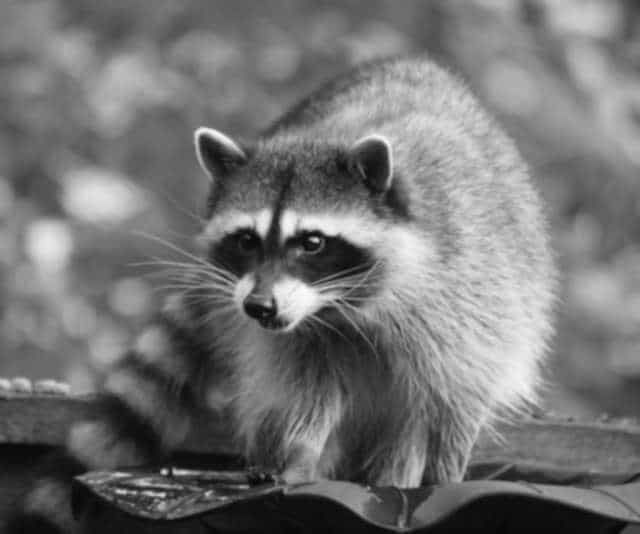
There is one kind of raccoon in Canada, the common raccoon, and it is the only member of its family found here. It is a stocky animal about 60 to 95 cm long, usually 5 to 12 kg, with males heavier than females. Look for the black mask across the eyes, a long bushy tail with black and tan rings, and a greyish coat. The front paws work like small hands, so raccoons can pry things open and turn knobs.
- Raccoon or opossum: an opossum has a whitish face, a long pointed snout, bare round ears and a rat-like tail. A raccoon has the mask and a bushy, ringed tail.
- Raccoon tracks: the hind print shows five long toes, and the front print looks like a small hand.
- A raccoon out in daylight isn't always sick: breeding season, a good food source or being flushed from hiding can bring one out.
- One that seems blind or confused, wanders aimlessly, or has discharge around the eyes and nose may have distemper or rabies. Keep away and call 311 in Toronto.
OUR APPROACH
How Our Raccoon Trapping Works
Step 1
Find the Way In
We find where the raccoon gets in and confirm the opening is in use: flour spread at the gap shows fresh prints, and a ball of paper pushed into it shows whether something forces it out. From January to September, a raccoon in an attic may be a mother with kits, so we look for young before any trap is set and explain the plan for them before work starts.
Step 2
Live Trapping
The licensed raccoon trapper on our staff sets a sturdy cage trap where the raccoon travels, and only when the property owner asks, as Ontario requires. Every live trap is checked at least once a day, which Ontario's trapping rules also require. We don't kill raccoons.
Step 3
Release Within 24 Hours
The raccoon is released within 24 hours, close to where it was caught. The province's guidance is within 1 km, so the animal stays where it knows the food and den sites and doesn't have to fight for new ground. It goes onto private land only with the owner's permission. A raccoon that is sick, injured or too young to release goes to an authorized wildlife rehabilitator.
Step 4
Seal and Clean Up
Trapping alone doesn't fix the problem, because other raccoons will find the same opening. Once we are sure every raccoon is out, the opening is closed with galvanized sheet metal, open vents get heavy rustproof screening, and the chimney is capped. Droppings and soiled insulation are cleaned out of the attic.
HEALTH RISKS
Are Raccoons Dangerous? Rabies and Raccoon Roundworm
Raccoons rarely attack: they are aggressive only when cornered and would sooner run, and attacks on people and pets are extremely rare. The real risks are rabies and the roundworm in their droppings. Raccoons are one of the four animals, with bats, foxes and skunks, that spread rabies most often in Ontario. Raccoon-strain rabies crossed into the Hamilton area from New York State in 2015, and no case of it has been detected since 2023. Rabies spreads through bites, or saliva in a cut or in the eyes, nose or mouth. It does not spread through blood, urine or feces. If you are bitten or scratched, wash the wound, then get medical care right away and report it to your public health unit.
- Raccoon roundworm is a parasite shed in raccoon droppings. People rarely get it, and only by swallowing eggs from soil, food, water or objects soiled with droppings; young children who put things in their mouths are at higher risk. The eggs become infectious 2 to 4 weeks after they are dropped and can last in soil for years. If a child may have swallowed droppings, see a doctor and mention the exposure.
- Distemper circulates in raccoons at low levels and can pass to unvaccinated dogs, but it is not a threat to human health. Ontario requires cats, dogs and ferrets over 3 months old to have rabies shots.
RISKS AND DAMAGE
What Damage Can Raccoons Cause?
The usual ways in are an uncapped chimney, loose shingles, or a gap at the roof, eaves or attic; garages and sheds get raided too. A gap of about 10 cm is enough, and in bad cases a raccoon will tear off shingles or fascia boards to get into an attic or wall. Once inside, raccoons use one spot again and again as a toilet, so droppings pile up in the attic. Outside, they tip over garbage, raid gardens and sweet corn, and roll up fresh sod to reach earthworms and grubs.
- Torn shingles, vents, soffits and fascia at the way in
- Droppings building up in an attic or roof latrine
- Rolled-up sod and small holes dug in the lawn
- Raided garbage, organics bins and bird feeders
A raccoon in the house should be dealt with soon, but in the right order: from late winter to early fall, check for kits before anything is trapped or sealed.
CAUSES
Why You Have Raccoons
Raccoons come to your yard for food and into your house for a den. Toronto's raccoons find a good share of their food in garbage, and they also eat grubs, insects, fruit, nuts and pet food left outside. In spring, a female needs a den for her kits, and an uncapped chimney stands in well for a hollow tree. Attics work too.
What Draws Them In
- Garbage and organics bins left out overnight or with loose lids
- Pet food served outside
- Bird seed spilled under feeders
- Grubs in the lawn, close to the surface after rain
- Fallen fruit and ripe garden vegetables
- Ponds and other standing water
How They Get In
- Uncapped chimneys
- Loose shingles and roof vents
- Openings at the eaves, soffits and fascia
- Gaps into garages and sheds
- Open space under decks, porches and stairs
- Tree branches that hang over the roof
HABITS
Life Cycle and Habits
Habitat
Raccoons live wherever there is water, food and somewhere to den. In the wild they use hollow trees, logs and old burrows; in towns they den in sewers, culverts, garages, under porches and sheds, and in chimneys and attics. Their home ranges often overlap. In the city they can become quite tame and show little fear of people.
Diet
Raccoons eat almost anything: fruit, corn, nuts and acorns, insects, worms and grubs, crayfish, frogs, bird eggs and small rodents. In Toronto they get a good portion of their food from garbage.
Life Cycle
Mating starts with longer days, usually between January and April, and peaks in February and March in Canada. Kits are born after about 63 days, mostly in April or May, three to five to a litter and up to seven in Canada. Their eyes open at about 3 weeks, and at about two months they follow their mother out of the den. They are weaned at 2 to 4 months. A female raises one litter a year, though a late litter can arrive as late as August. The family often dens together through the first winter.
Seasonal Behaviour in Ontario
Raccoons don't truly hibernate. In cold weather they hole up and live on the fat they put on in fall, when they can reach twice their spring weight, and on mild winter days they may be out. Late winter brings mating, and by spring females need dens for their kits. Spring and summer are kit season in attics and chimneys, and the family stays together into fall.
PREVENTION
How to Keep Raccoons Out
- Keep garbage and organics bins in a garage or shed, and put them at the curb as close to collection time as you can.
- Feed pets indoors, and never feed raccoons.
- Use a spill-proof bird feeder and clean up seed that falls.
- Have the chimney capped securely and check the cap every year.
- Cover open air vents with heavy, rustproof screening, and repair loose shingles, soffits and siding.
- Trim tree branches that hang over the roof.
- Close in the open space under decks, porches and stairs.
- Keep the garage door shut overnight.
- Cover sandboxes so they don't become a raccoon latrine.
- Pick up fallen fruit and ripe vegetables.
How to Get Rid of Raccoons: What Ontario Allows
You can deal with a raccoon on your own property, inside Ontario's rules. If it can wait, the province says autumn is the time, after the young have left the den. A mother raccoon in a chimney usually leaves with her young on her own after eight to ten weeks. If you trap one yourself, the same rules apply to you as to us.
- Release a trapped raccoon within 24 hours, within 1 km of where you caught it, and on someone else's land only with their permission.
- Check a live trap at least once a day.
- Don't smoke a raccoon out of a chimney or drop anything down it, mothballs included. Adults can climb out, but kits can't.
- Don't close an opening until you are sure every raccoon has left, especially from March to July, when there may be babies. An animal sealed in will die there.
- Raccoons are furbearing mammals in Ontario, and the province says their den can't be destroyed without ministry approval.
- Call a professional when the way in is on the roof, the raccoon is in a chimney, or there may be kits.
Raccoon in the Attic With Babies: Spring and Summer
From January to September, the Toronto Wildlife Centre says to assume an attic raccoon is a mother with babies. Mothers move their kits between dens and will come back for young left near the den. If the mother alone is trapped or moved, though, kits too young to follow her can be left behind to starve; the City of Toronto warns about exactly this. So our order is: find the kits, explain the plan, then trap. Under Ontario's rules, young that can't be released go to an authorized wildlife rehabilitator.
WHY CHOOSE US
Why Ontario Homeowners Choose Sting Out
No Binding Contracts
Cancel anytime, with no lock-in and no pressure. If you keep us on, it should be because the work is getting results.
Licensed Trapper on Staff
When an animal has to be caught, a licensed trapper on our staff live-traps it. Bats are never trapped: they leave through one-way doors, in Ontario's exclusion windows.
Ontario's Release Rules
A live-caught animal is released within 24 hours, close to where it was caught, and only on property whose owner agrees. Sick, injured or orphaned animals go to an authorized wildlife rehabilitator.
5 Star Google Rating
Read what GTA homeowners and businesses say about us on Google Maps.
COMMON QUESTIONS
Raccoon Removal: Questions We Get
Will animal services remove a raccoon from my attic?
Not a healthy one. Toronto Animal Services staff aren't licensed trappers and don't supply or rent out traps, and Mississauga Animal Services won't trap and move healthy raccoons. A healthy raccoon on private property is the owner's to deal with, or to hire a wildlife agent for. For a raccoon that looks sick or injured, or very young raccoons alone, call 311 in Toronto or 905-896-5858 in Mississauga.
Can I trap a raccoon and drive it to a park or the country?
No. Ontario's rules say a live-caught raccoon must be released within 24 hours, close to where it was caught, and the province's guidance is within 1 km. A raccoon that looks healthy can still be in the early stages of rabies or distemper, so moving it far can spread disease. Moved raccoons also lose the food and den sites they know, and a mother taken away leaves her kits behind.
Won't a raccoon released nearby just come back?
It can, because it is released inside the area it knows. That is why trapping is never the whole job. Ontario's own guidance says moving an animal won't always fix the problem, because whatever drew it to your property is still there. So the way in is closed as soon as the raccoon is out, and the food in the yard has to go too.
How do I get a raccoon out of my chimney?
If you can wait, the easiest way is to let it leave on its own: Ontario says the female and her young move out after eight to ten weeks. Never smoke it out or pour anything down the flue, because kits can't climb out. If it can't wait, the mother is live-trapped, the plan for any kits is agreed before work starts, and the chimney is capped once the family is out.
How much does raccoon removal cost?
The price is set after the inspection, because it depends on the job: how many ways in there are and how high up, whether there are kits, how many visits the trapping takes, and whether the attic needs droppings and soiled insulation cleaned out.
How do I clean up raccoon droppings?
Put on gloves and a face mask, and keep the droppings off your clothes. Bag the waste twice and put it in the garbage, or bury or burn it. Pour boiling water over decks, patios and other hard surfaces where raccoons left droppings: other disinfectants don't work on roundworm eggs. Wash your hands with soap and water once the gloves are off, and keep children away from the spot.
How do I get rid of raccoons in my yard?
Take away the food: lock or store bins, feed pets indoors, pick up fallen fruit and bird seed. Close in the space under decks and sheds. Where raccoons roll up new sod, pin it down with long wire pins or stakes until it roots. Lights, radios and scare devices can work for a while, but wildlife researchers say none of them keeps raccoons away for long.
Sources
Last reviewed
- Ontario: Harass, capture or kill a wild animal damaging private property
- Ontario: Preventing and managing conflicts with small animals
- Ontario e-Laws: O. Reg. 665/98 (Hunting), ss. 132 and 133
- Ontario e-Laws: O. Reg. 667/98 (Trapping), s. 25
- Ontario e-Laws: O. Reg. 669/98, Schedule 1 (furbearing mammals)
- Ontario: Rabies
- Ontario: Rabies in humans
- Ontario: Rabies in wildlife
- City of Toronto: Raccoons
- City of Toronto: Wildlife Trapping
- City of Toronto: Orphaned and Injured Wildlife
- City of Toronto: Wildlife Proof Your Home and Lawn
- City of Toronto: Mammals of Toronto (Toronto Biodiversity Series)
- City of Mississauga: Raccoons
- BC Centre for Disease Control: Raccoon roundworm
- The Canadian Encyclopedia: Raccoon
- The Canadian Encyclopedia: Opossum
- Internet Center for Wildlife Damage Management: Raccoon biology
- Internet Center for Wildlife Damage Management: Raccoon damage identification
- Internet Center for Wildlife Damage Management: Raccoon damage prevention and control
- Internet Center for Wildlife Damage Management: Raccoons
- Toronto Wildlife Centre: Raccoons living in an attic
FREE QUOTE
Get Your Free Quote
- 1Fill Form
- 2We Call You
- 3We Remove It
- 5 Star Google Rating
- Ontario-licensed exterminators
- No contracts, most calls returned within 1 hour
SERVICE AREAS
Raccoon Removal Across Toronto, Oakville & the GTA
We remove raccoons from homes and businesses throughout Toronto and Southern Ontario.
We Also Handle
- SquirrelsSquirrels out of the attic, then the entry sealed.
- SkunksSkunks out from under decks and sheds, then screened out.
- BatsBat exclusion in Ontario's legal windows, then sealing.
- BirdsPigeon netting and spikes, plus vent guards and deterrents for other birds.
- Mice & RatsRodent removal with full exclusion work.
- MolesLawn and garden mole control, trapped in the tunnels in use.
See our residential pest control and commercial pest control services, or go back to the Sting Out home page.